
For a spotless facility, you need more than a hose and a floor drain. Across industrial plants, food processing environments, and other hygiene-sensitive settings, washdown stations give teams a purpose-built setup for cleaning equipment, surfaces, and work areas with precise water delivery, temperature control, and flow.
Washdown systems have become increasingly important as facilities face tighter expectations for hygiene, food safety, worker protection, and documentation. Older cleanup methods often involved improvised hoses and inconsistent water delivery, but modern sanitation stations are designed to give operators greater control, safer operation, and more reliable results. That's a major advantage in facilities where residue buildup, moisture, product debris, or chemical exposure create quality issues, contamination risks, or safety concerns.
So, what is a washdown station in action? Simply put, a washdown station is the place where utilities, cleaning tools, and sanitation procedures all come together. A well-designed station allows teams to clean faster, work more consistently, and follow established washdown procedures instead of relying on guesswork. More than a convenience, washdown stations support the sanitation consistency and operational reliability facilities depend on every day.
Key Components and Features of Washdown Stations
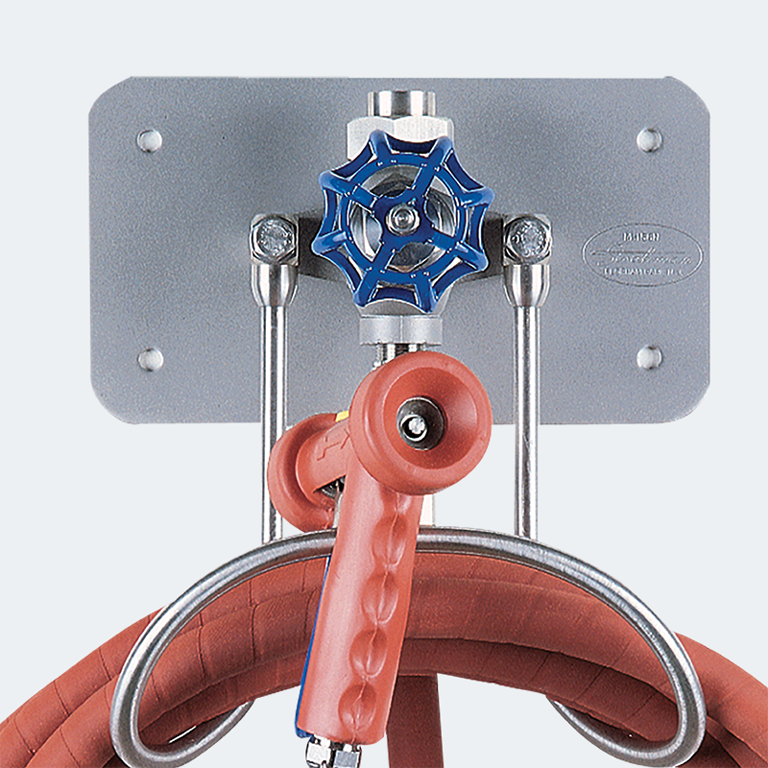
Though the primary components of a washdown station may seem straightforward, each one plays an important role in system performance, durability, operator safety, and sanitation consistency. Depending on the application, washdown systems may include mixing units, hoses, spray nozzles, control valves, mounting hardware, and hose management solutions such as racks or reels. In demanding industrial environments, factors like water temperature control, spray performance, and equipment durability can directly affect cleaning effectiveness, sanitation consistency, and day-to-day operations.
Hoses and nozzles handle much of the heavy lifting, so to speak. Hose length, flexibility, and heat resistance all affect how easily teams can reach equipment and production areas. Spray nozzles shape coverage, impact, and water use; the wrong nozzle can waste water or miss important surfaces, while the right one can improve cleaning results. Temperature is also a consideration, as hot water is better at loosening fats, sugars, proteins, and stubborn residue than cold water alone. That's why many washdown systems are built around hot-and-cold or steam-and-cold mixing.
Material selection is another major piece of the puzzle. In wet, corrosive, or frequently sanitized environments, durability comes down to how well the station resists wear and corrosion over time. Stainless steel is often favored in hygiene-sensitive areas since it holds up in demanding conditions and stays easy to clean. Other materials, including bronze, can also be adequate depending on the process area and operating conditions.
For maintenance supervisors and facility engineers, the station should also fit the bigger picture for facility management. It needs to match the available water pressure, utility connections, traffic patterns, and the facility's cleaning schedule. Placement is also paramount; a station located near high-traffic areas with proper drainage and organized storage is easier to use and more likely to support consistent sanitation.
Facilities weighing different options can look through Strahman's washdown equipment line to compare station types and related components.
The Role of Washdown Stations in Industrial Hygiene
Washdown stations play a strong part in supporting industrial hygiene best practices. In addition to rinsing surfaces, they reduce residue, remove contaminants, improve housekeeping, and support safer cleanup. Throughout industrial environments, poor sanitation can contribute to slip hazards, cross-contamination, microbial growth, chemical exposure, and product quality problems. However, these risks can be controlled through repeatable cleaning protocols.
This is especially noteworthy for areas where product residue or process waste builds up quickly. Rather than relying on sporadic manual cleanup, washdown stations give workers a dedicated point for sanitation, allowing faster response times and more uniform results. Greater consistency reduces contamination risks and helps teams address problems before they spiral into production delays or audit issues.
Washdown stations can also support spill containment and wider environmental safety goals. For many facilities, spill response depends on being able to clean surfaces quickly and direct runoff properly. A controlled washdown setup streamlines that process, making it easier to connect cleaning to drainage planning, approved detergents, and site-specific safety guidelines. From an operations standpoint, the station simply becomes another part of safety compliance.
Washdown Stations in Food Processing: Ensuring Food Safety
In food processing, sanitation is inextricably linked to product safety, audit readiness, and brand protection. Equipment, floors, drains, walls, and surrounding work areas all call for regular cleaning to reduce the chance of contamination.
In such environments, washdown stations enable food processing hygiene by helping teams carry out food safety protocols more consistently. They make it simpler to rinse away soils, clean equipment exteriors, and support the routine sanitation steps needed between shifts, product changes, or scheduled cleaning cycles. Without a practical setup, even a strong written program can be difficult to execute on the floor.
This is why washdown stations are so valuable in facilities like dairies, breweries, meat plants, bakeries, wineries, and other food and beverage operations. The connection is clear: regular washdown reduces contamination risk, protects product quality, and maintains a cleaner production environment. That same principle applies across many other operations where hygiene compliance depends on consistent, documented sanitation.
Washdown stations also help facilities work toward food hygiene certification requirements and support effective sanitation procedures during audits and inspections. Auditors might follow different standards, but they tend to look for the same signs: cleaning must be repeatable, documented, and aligned with the facility's hazard controls. Stations that deliver dependable water flow and temperature control make that possible.
Compliance with Safety and Hygiene Regulations
Washdown stations sit within a larger framework of safety regulations and hygiene standards. In the United States, that often entails OSHA requirements for workplace sanitation and safety, along with FDA or USDA expectations for sanitary conditions in food-related operations. While these regulations don't always prescribe one exact piece of equipment, they require facilities to keep safe, sanitary conditions and control the risks that come from inadequate cleaning.
Staying compliant involves several steps. Facilities need to identify high-risk areas, pick the right washdown system for the process, educate staff, confirm proper usage, and maintain detailed records of sanitation work. Where chemical cleaning agents are used, facilities need to follow all product directions, worker safety procedures, and internal documentation requirements. Because, more than failed inspections, weak sanitation practices can contribute to product loss, downtime, worker injuries, and expensive corrective actions.
Best Practices for Operating and Maintaining Washdown Stations
The best way to boost performance is through routine maintenance practices and thorough training. A washdown station should be inspected on a regular basis for hose wear, leaking valves, damaged fittings, poor spray performance, and buildup that could obstruct operation. Nozzles should be cleaned or replaced when needed, and hose storage should keep lines organized and off the floor when they're not in use.
Staff training is just as serious as the hardware selection. Workers should know when and how to use the station, what cleaning protocols apply in each area, what chemicals are approved, and how to handle hot water or steam safely. This is even more important in multi-shift operations, where inconsistent habits can weaken results over time.
Additionally, facilities can strengthen long-term performance by standardizing parts and working with sanitation equipment suppliers that understand the operating environment. Common issues like clogged nozzles, poor hose storage, pressure inconsistencies, and valve wear are simpler to solve when the system is designed with serviceability in mind.
Sometimes, teams will default to aggressive pressure washing when the better approach would be controlled flow with the right nozzle and cleaning chemistry. At the end of the day, the best results come from matching the station setup to the actual soil, surface, and sanitation objective.
A Stronger Sanitation Strategy
To recap: what is a washdown station? It's a dedicated sanitation setup that allows facilities to adhere to hygiene standards, foster safer working conditions, and carry out more effective industrial cleaning. In food and beverage plants, it promotes food processing hygiene, sanitation consistency, and audit readiness. And in broader industrial settings, it controls residue and spills, encourages environmental safety, and optimizes daily operations.
For facilities considering new washdown systems, the next step is to review the process area, utility conditions, soil load, operator needs, and maintenance expectations. Remember: the best solution is one that fits the real demands of the site for the long haul. Customers curious to learn more about the importance of washdown stations can check out Strahman's additional resources.