
Building a Complete Washdown Strategy for Food, Dairy, and Beverage Facilities
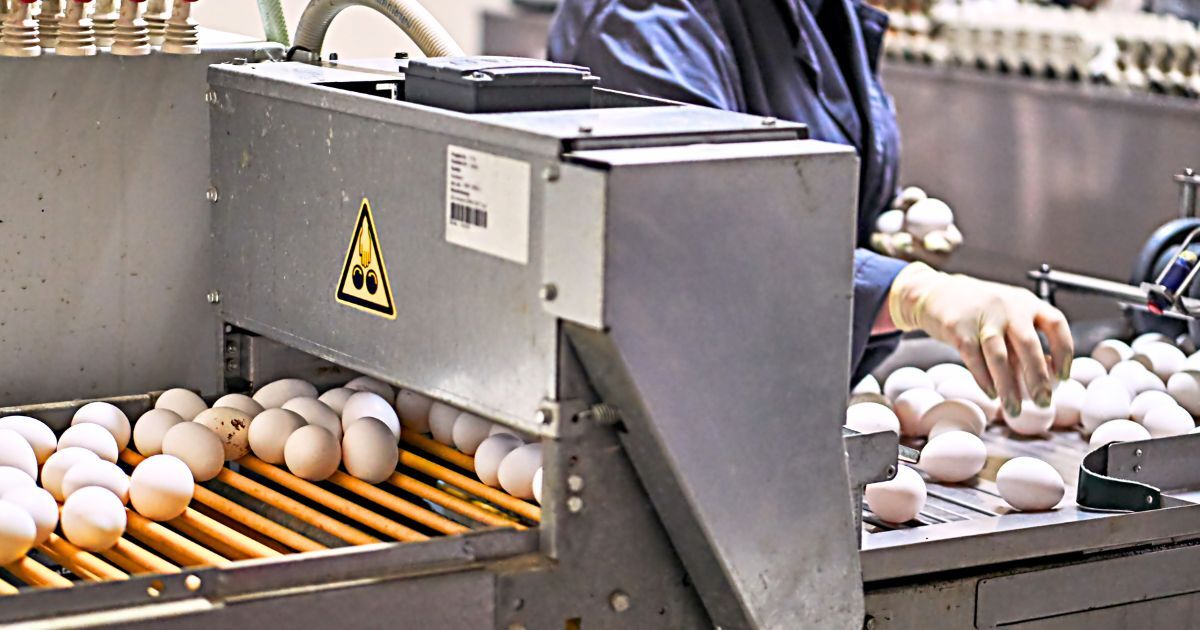
In Part 1 of this series, we looked at a nearly 2 million dozen egg recall issued by a California egg producer in May 2025, after a Salmonella outbreak sickened dozens of people and hospitalized more than 20. The underlying issue in that story was media translocation: the process by which washdown water carries contaminants from one zone of a facility to another rather than removing them. What looks like routine cleaning can, without the right equipment and protocols in place, become the mechanism of contamination.
That case points to a broader truth. Washdown is not just a cleaning task, and it should not be managed as one. In food, dairy, and beverage facilities, washdown drives plant uptime, employee safety, audit readiness, and operational consistency. Get it wrong, and the costs extend well beyond a single recall. In 2023 dollars, foodborne illness costs the U.S. economy an estimated $74.7 billion annually, according to USDA's Economic Research Service.
This installment goes inside a real washdown audit, then builds out the four pillars of a washdown strategy that protects product, supports uptime, and holds up under audit.
Inside the Audit: What a Real Washdown Audit Found
A large egg-processing plant in southern Arizona conducted a routine sanitation audit. On paper, nothing looked wrong. In practice, the auditor flagged a specific concern: the output from the plant's spray nozzle during sanitation could be causing media translocation, with contaminants dislodged during cleaning reattaching to sanitized equipment. 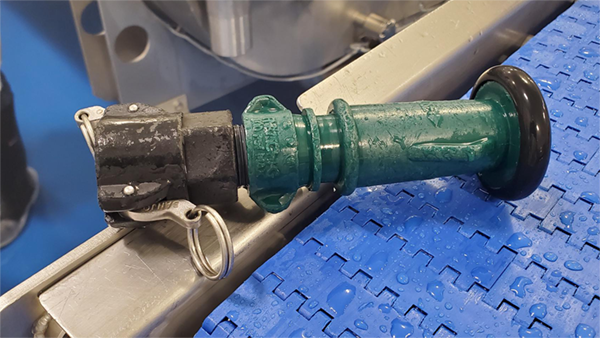
The facility was cleaning equipment and floors with a fire-hose-style nozzle, twisting the tip to adjust spray pattern and flow. It had no shut-off feature if a worker dropped the nozzle mid-spray. Verified testing with an inline water pressure meter on both hot and cold lines confirmed the pressure itself was within code, so the problem wasn't that the system was out of spec. It was the nozzle: imprecise control over pattern and flow, with no way to stop an accidental discharge.
The audit team also ran a simple water-use test, timing how fast the nozzle filled a five-gallon bucket, then extrapolated an annual cost based on the plant's actual usage. The fix was a nozzle swap, from the fire hose-style nozzle to a Strahman Hydro-Pro 150® spray gun, which offers a variable cone-to-solid-stream pattern, a locking trigger to reduce operator fatigue, and an automatic safety shut-off if the nozzle is dropped. The projected result: over $250,000 in annual savings.
The broader lesson holds beyond this one plant. Auditors and food safety teams generally rely on a mix of tools to catch these gaps, including pressure and flow testing, zone mapping to see where cleaned and uncleaned areas meet, and visual tracing of where washdown water travels once it leaves the nozzle. What they often find is sobering. Listeria monocytogenes can persist in food processing environments for months or years, colonizing cracked surfaces, drains, and other hard-to-clean niches, according to peer-reviewed research co-authored by FDA scientists. And these gaps are not rare: the FDA was behind 224 food recalls in 2023 alone.
None of this shows up on an invoice the day it happens. It shows up weeks later, in a failed audit or a line that will not stay running, which is exactly why the facilities that get ahead of it treat washdown as more than a compliance checkbox.
Washdown as an Uptime Strategy
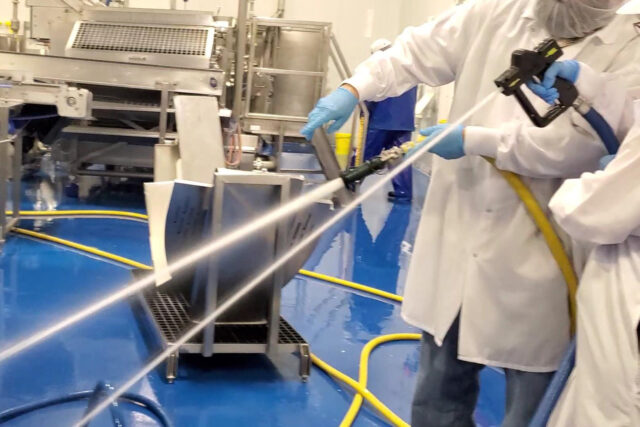 Facilities that treat washdown as operational infrastructure, not a janitorial afterthought, see it show up in the numbers that matter most to plant managers: fewer unplanned stoppages and stronger audit performance.
The financial case is direct. Food and beverage facilities can lose between $4,000 and $30,000 for every hour a line stands still, before scrapped product, regulatory exposure, and overtime wages are even counted. The Arizona plant's audit shows the same math working in the other direction: a single equipment decision, in that case a nozzle, carried a quarter-million dollars a year in consequence, without a recall ever entering the picture.
The Four Pillars of a Complete Washdown Strategy
A washdown program built for uptime and audit readiness rests on four elements working together.
Pillar 1: Station Configuration Matched to Environment
Not every zone in a facility has the same sanitation requirements, and station configuration should match. Steam and cold, hot and cold, or single-supply setups each serve a different combination of pathogen risk, product sensitivity, and cleaning speed. Choosing one configuration for an entire facility, rather than mapping configuration to zone risk, is one of the more common gaps auditors find.
Temperature matters more than many programs account for. FDA Food Code guidance supports sanitizing solution contact above 171°F for certain manual sanitizing applications, a threshold that only the right configuration, built for the zone it serves, can consistently deliver.
Pillar 2: Nozzle Selection and Water Volume
The Arizona case is a direct illustration of this pillar. Mismatched pressure or spray pattern is one of the leading causes of media translocation, and imprecise nozzle control, not excess pressure, was the actual root cause once tested. Matching nozzle type and control features to the task, rather than defaulting to whatever nozzle is already on hand, is a fundamental control point, and it can carry real financial weight: a single nozzle swap projected six figures in annual savings at that plant.
Color-coded nozzle systems are also a practical way to support HACCP zone differentiation and FSMA alignment, making it easier for teams to keep tools and the zones they are used in separate at a glance.
Pillar 3: Hose and Equipment Storage
A hose left on the floor between shifts is not a minor housekeeping issue, it also presents a safety hazard, resulting in trips and falls. It is an active contamination vector, picking up whatever is on that floor and carrying it into the next washdown cycle. Improperly stored nozzles carry the same risk.
Equipment design and maintenance are not optional extras under food safety law. The FSMA Preventive Controls rule requires food facilities to maintain a written food safety plan that accounts for equipment design and maintenance. Hose materials rated for food contact, and storage systems that keep hoses and nozzles off the floor between shifts, close a gap that is easy to overlook and expensive to leave open.
Pillar 4: Valve Reliability and Automation
Valves are easy to overlook until they fail, and FDA inspectors notice when they do. Each fiscal year, FDA publishes data summarizing the compliance areas most frequently cited in inspection findings, a reminder of how closely equipment reliability tracks with inspection outcomes. Automation that removes reliance on manual valve operation, paired with valves engineered to seal consistently over thousands of cycles, removes a point of variability from an already complex sanitation process, supporting the kind of consistency that audits and uptime both depend on.
What This Looks Like Across Markets
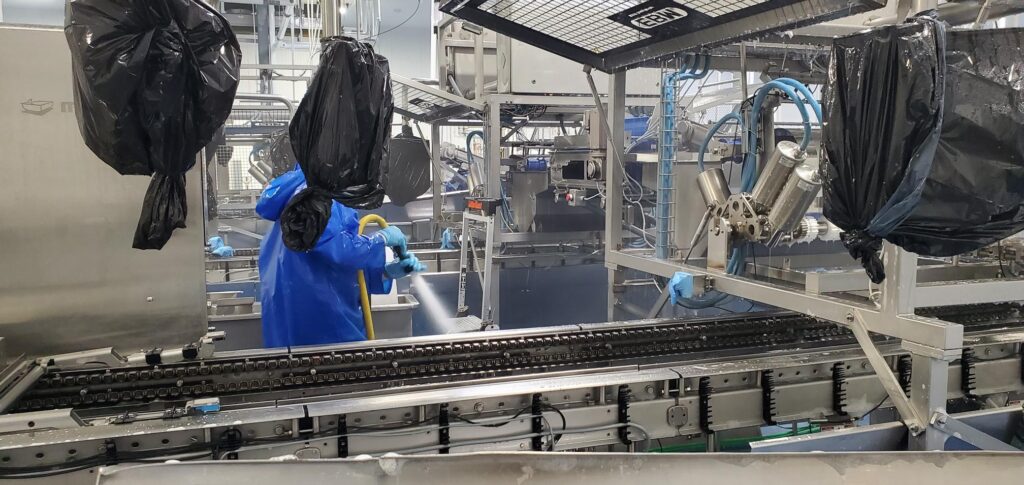 The four pillars apply broadly, but which one carries the most weight shifts by industry.
- Food and beverage facilities manage high-frequency washdowns, allergen zone separation, and ongoing FSMA compliance across multiple product lines, which puts the most pressure on Pillar 2: nozzles precise enough to clean one zone without contaminating the next.
- Dairy operations add temperature sensitivity and frequent Clean-in-Place (CIP) cycles on top of some of the strictest pathogen standards in the industry, making Pillar 1 station configuration, steam versus hot versus cold, a first-order decision rather than a preference.
- Pharma and personal care manufacturers treat contamination control not as a best practice but as a regulatory requirement with direct compliance consequences, in which Pillar 4 automation and documentation make consistency auditable rather than anecdotal.
Demand for rigor across all three is only growing. The global rapid food safety testing market is projected to reach $31.22 billion by 2030, up from $19.66 billion in 2025, according to MarketsandMarkets, a signal of how seriously the industry, food and beverage manufacturers among them, is investing in contamination control.
Building Your Washdown Program: A Practical Starting Point
For facilities ready to move from reactive cleaning to a real washdown strategy, three steps get the program moving:
- Zone mapping. Identify high-risk areas, transition zones, and drainage patterns before making any equipment changes.
- Equipment audit. Assess station configurations, nozzle types, hose conditions, and valve reliability against what each zone requires, the way the Arizona audit did.
- Protocol review. Align washdown frequency, pressure settings, and chemical use with HACCP and FSMA requirements.
Facilities that build these habits into a documented, repeatable program are the ones that go into an audit with confidence rather than hoping nothing surfaces.
Washdown is operational infrastructure. The facilities that perform best under audit and experience the fewest unplanned shutdowns are the ones that treat it that way, with station configuration, nozzle selection, hose management, and valve reliability working together as a system rather than a collection of individual purchases.
The California egg recall we opened Part 1 with shows what happens when that system fails. The Arizona plant's audit shows what happens when it doesn't: no recall, no headline, just a facility that caught the risk before it became one and saved a quarter-million dollars in the process.