
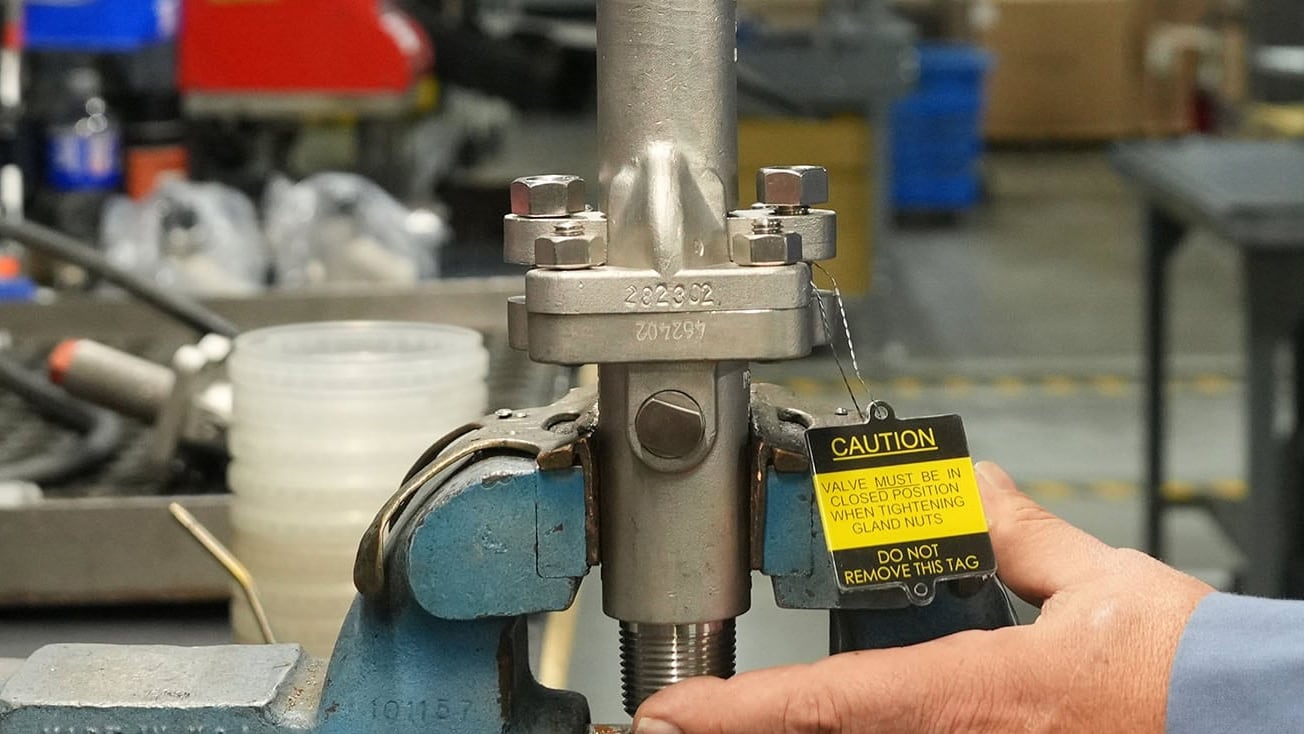
A sampling valve is a process valve designed to withdraw a controlled quantity of material from piping, a vessel, or other process equipment for testing or analysis. The valve creates a dedicated sampling point so a representative sample can be collected while the process remains in operation. Some sampling valves can also be configured to introduce or inject media into a process when required.
Representative sampling supports quality control, process monitoring, troubleshooting, and other forms of analysis. Selecting the appropriate valve is important because process media, temperature, pressure, sampling frequency, and installation requirements can all influence performance and sample reliability.
Several sampling valve types are available to accommodate these different operating conditions. They are used throughout chemical and petrochemical processing, food and beverage production, oil and gas operations, pulp and paper manufacturing, and other process industries. Understanding how different sampling valves operate and how their configurations vary can help engineers and operators select an appropriate design for their process.
What Are the Different Types of Sampling Valves?
Many types of sampling valves use a piston to open and close the sampling point. Differences in seating and operating mechanisms allow these valves to accommodate different process conditions and sampling requirements.
Soft-Seated Piston Sampling Valves
A piston sampling valve uses a moving piston to control the opening through which process material is withdrawn. When closed, the piston isolates the process. Opening the valve retracts the piston and creates a path for the sample to exit.
Soft-seated sampling valves use sealing materials selected for compatibility with the process media and operating conditions. They are commonly used for liquid sampling applications where temperatures, pressures, and media characteristics are compatible with the selected seat material.
Metal-Seated Sampling Valves
Metal-seated sampling valves provide another option when process conditions exceed the capabilities of soft seating. Rather than relying on a soft sealing material at the primary seat, these valves use metal seating designed for more demanding service.
Among common sampling valves, metal-seated designs can be particularly useful for processes involving elevated temperatures or pressures. They may also be appropriate for severe-service chemical and petrochemical applications where the valve must withstand challenging operating conditions.
Quick-Sample Sampling Valves
Sampling frequency can also influence the preferred valve configuration. Quick-Sample valves use a spring-loaded operating mechanism that allows an operator to withdraw a sample efficiently and then return the valve to its closed position.
This operating method can be useful when samples must be taken regularly throughout production. Instead of focusing on different seat materials or process connections, the quick-sample configuration addresses how the operator interacts with the valve during routine sampling.
Quick-Advance Sampling Valves
Quick-Advance valves provide another approach to frequent sampling. These designs use a rack-and-gear mechanism to rapidly advance and retract the piston.
The mechanical arrangement provides a repeatable operating motion while retaining the basic advantages of piston sampling. Choosing between quick-sample and quick-advance configurations therefore depends partly on how frequently samples are collected and the preferred method of valve operation.
Why Piston Valve Design Matters for Reliable Sampling
Dead space is an important consideration when evaluating sampling valve types. It refers to internal areas where process material can remain after a sample has been collected. Material retained in these cavities can potentially mix with the next sample, making it less representative of current process conditions.
A piston design that minimizes internal cavities can help reduce retained material at the sampling point. This characteristic can be particularly valuable when the process media is viscous, contains suspended solids, or tends to accumulate within conventional valve cavities.
Non-clogging operation is another consideration. A valve that becomes obstructed by process material can make routine sampling more difficult and increase maintenance requirements.
Materials and seals also affect long-term reliability. Wetted components should be compatible with the process media, while sealing materials must be appropriate for the expected temperature and chemical exposure. Maintenance requirements and the ability to keep the valve clean should be considered alongside its operating performance.
Sampling Valve Connections and Installation Configurations
Even the right valve design must be compatible with the piping or vessel where it will be installed. Different sampling valves may be available with threaded or NPT, flanged, insert-flange, and welded or socket-weld connections.
Threaded connections can provide a practical installation method for compatible piping systems, while conventional flanged configurations may be appropriate where an existing flange connection is available. Insert-flange designs provide another option for certain existing piping arrangements, including applications where modifying the pipeline itself would be less practical.
Installation planning should also account for valve orientation and accessibility. Operators need sufficient space to operate the valve and safely position appropriate sample collection equipment. Considering these requirements before installation can make routine sampling and maintenance easier once the system is operating.
How to Choose the Right Sampling Valve Type
Selecting between the available types of sampling valves starts with understanding the process rather than choosing a valve based on a single specification.
Process media should be evaluated first. Viscosity, solids content, chemical composition, and the potential for material buildup can all influence valve design and material selection. Operating temperature, pressure, and vacuum conditions should then be compared with the valve's capabilities.
Seat selection is another important consideration. Soft seating may be appropriate under compatible process conditions, while higher temperatures, pressures, or other demanding conditions may call for a metal-seated design.
Sampling requirements matter as well. A valve used occasionally may have different operating requirements from one used repeatedly throughout a production shift. Sampling frequency and required sample volume can therefore influence the choice between standard manual, quick-sample, quick-advance, or actuated operation where applicable.
Finally, consider the process connection, available installation space, material and seal compatibility, accessibility, and anticipated maintenance. In food and beverage processing, sanitary sample valves may also require additional attention to material selection, cleanability, and minimizing areas where product can accumulate.
Evaluating these factors together helps ensure the selected valve configuration is suited to the actual process rather than simply meeting one pressure, temperature, or connection requirement.
Find the Right Sampling Valve for Your Application
The appropriate sampling valve depends on more than the material being sampled. Seating, operating mechanism, temperature, pressure, process connection, sampling frequency, and installation requirements all influence which configuration is best suited to an application.
Strahman manufactures sampling valves for a range of process conditions, including SV soft-seated piston sampling valves, MS metal-seated sampling valves, and QS and QA configurations for different operating requirements. Standard and engineered-to-order options are available to accommodate specialized applications.
Explore Strahman's sampling valve options or contact Strahman for help identifying a valve and configuration that meet your process and sampling requirements.